Best HR Software for Small Businesses in UAE — 2026 Guide
HR Challenges Unique to UAE Small and Medium Enterprises
Running a small or medium-sized business in the UAE is rewarding, but it comes with an HR compliance burden that is significantly heavier than in most other countries. While a small business in the UK or US might be able to get away with basic payroll software and a spreadsheet for leave tracking, UAE SMEs face a web of mandatory obligations that demand proper systems from day one.
Here are the key HR challenges that make UAE SMEs different:
- Wages Protection System (WPS) Compliance: All private sector employers — including companies with just 2 or 3 employees — are required by MOHRE to process salaries through WPS. This means generating a correctly formatted SIF (Salary Information File) every single payroll cycle. Get it wrong, and you risk fines, permit bans, and company blacklisting.
- Limited or No Dedicated HR Staff: Most SMEs in the UAE operate with a finance manager or business owner doubling as HR. There is no room for complex software that requires specialist knowledge to operate.
- Multi-Nationality Workforce: UAE SMEs typically employ staff from 5–15 different nationalities. Labour laws, visa categories, gratuity entitlements, and payroll treatments vary significantly across employee types (UAE Nationals, GCC nationals, expatriates on free zone vs. mainland visas).
- High Staff Turnover: The UAE hospitality, retail, and construction sectors — which are dominated by SMEs — have among the highest turnover rates in the world. Onboarding and offboarding processes need to be fast, accurate, and compliant.
- Emiratisation (Nafis) Requirements: Companies in certain sectors must meet Emiratisation quotas. HR software needs to track UAE National employees separately and generate Nafis-compliant reports.
What Small Businesses Need from HR Software in 2026
The ideal HR software for a UAE SME in 2026 must balance several competing priorities:
- Affordability: SMEs cannot justify enterprise-level licensing fees. The platform should offer per-employee pricing or a flat SME rate that scales predictably.
- Ease of Use: Setup should take hours, not months. Non-technical business owners should be able to run payroll, manage attendance, and generate WPS SIF files without IT support.
- WPS Payroll Integration: As discussed above, WPS compliance is non-negotiable. The software must generate SIF files automatically and ideally submit them directly to the bank.
- Biometric Attendance Option: To prevent time theft and buddy-punching, especially in retail, hospitality, and construction SMEs, biometric device integration is a major advantage.
- Mobile App: UAE business owners are mobile-first. Being able to approve leave requests, view attendance summaries, and trigger payroll runs from a smartphone is a significant quality-of-life improvement.
- Leave Management: UAE Labour Law mandates specific annual leave accruals, sick leave provisions, and public holiday calculations. These should be automated, not manually tracked.
- Scalability: The platform should grow with the business — from 10 employees today to 500 employees in three years, without requiring a complete system migration.
Top HR Software Platforms for UAE Small Businesses in 2026
1. AiTIME — Best HR Software for UAE SMEs
AiTIME is the leading HR software for small and medium-sized businesses in the UAE in 2026. Designed from the ground up for the UAE market, it packs enterprise-level compliance features into an interface that any business owner can master in a single day.
Why AiTIME is the top choice for UAE SMEs:
- Quick Setup: AiTIME can be fully configured and processing live payroll within one business day. The onboarding wizard guides users through company setup, employee import, salary structure configuration, and WPS bank linkage step by step.
- WPS Payroll Automation: AiTIME generates CBUAE-compliant SIF files automatically at the end of every payroll cycle. Salary components, deductions, overtime premiums, and allowances are all pulled from integrated attendance and leave data.
- Biometric Device Integration: AiTIME integrates natively with ZKTeco biometric terminals — the most widely used brand in the UAE. Small businesses can install a single fingerprint or face recognition terminal and have it syncing to AiTIME within minutes.
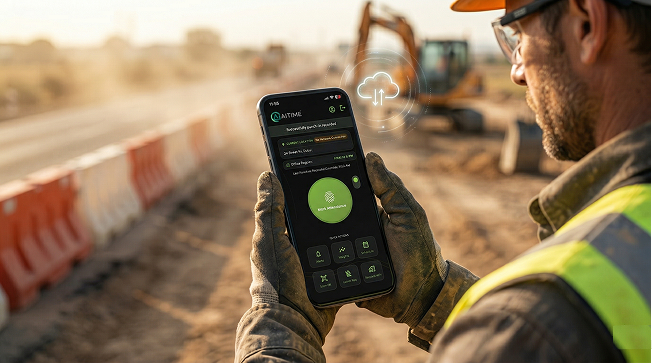
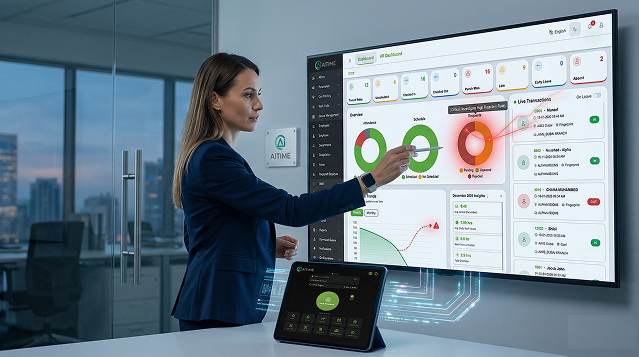
- Mobile App for Business Owners: The AiTIME mobile app gives business owners a real-time view of who is in the office, who is on leave, and whether payroll is on track — all from their phone.
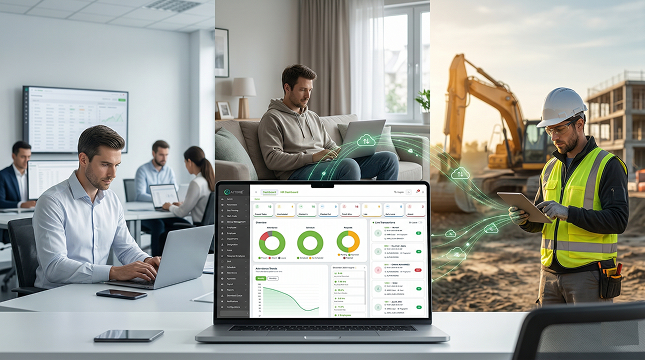
- Scalable Architecture: AiTIME scales smoothly from 10 employees to 500+ without any migration, platform change, or reconfiguration. Pricing scales transparently with headcount.
- Leave Management: Annual leave, sick leave, maternity leave, Hajj leave, and UAE public holidays are all pre-configured in line with UAE Labour Law. Employees can submit leave requests through the mobile app; managers approve or reject with one tap.
- Emiratisation Reporting: AiTIME tracks UAE National employees separately and generates Nafis-ready reports for government submission.
- Local UAE Support: AiTIME's support team is based in the UAE and provides assistance in both English and Arabic during UAE business hours.
Explore AiTIME's capabilities for Abu Dhabi-based businesses on the HR software Abu Dhabi page, or see how it handles payroll on the Dubai payroll software overview. You can also request a free personalised demo to see AiTIME in your business context.
2. Cloud HRMS for Growing Businesses
Several cloud-based HRMS platforms are available in the UAE that offer a solid feature set for growing SMEs. These platforms typically cover payroll, leave, and basic attendance — and some offer WPS integration. However, they are often built on international platforms localised for the UAE, which means UAE Labour Law features can lag behind regulation changes. Biometric hardware integration is typically limited or requires a third-party connector.
3. Standalone Payroll-First Platforms
Some UAE SMEs start with a standalone payroll platform and add HR modules as they grow. These are cost-effective for micro-businesses with 5–15 employees where HR complexity is minimal. The trade-off is the need to eventually migrate to a full HRMS as headcount grows — a process that is disruptive and often leads to data loss. Starting with a scalable platform like AiTIME avoids this entirely.
4. Global HRMS with UAE Localisation
Enterprise HRMS providers from the US and Europe offer UAE-localised modules for their platforms. These are powerful systems with deep feature sets but come with high implementation costs, long deployment timelines, and ongoing reliance on certified implementation partners. For UAE SMEs, the total cost of ownership is rarely justified until headcount exceeds 200–300 employees.
5. Integrated Accounting + Payroll Suites
Some UAE businesses use accounting platforms with integrated payroll modules. These work well when WPS requirements are simple (fixed salaries, minimal allowances) and the business has an in-house accountant who can manage payroll manually. As complexity grows — multiple allowance types, shift workers, gratuity provisions, Nafis reporting — standalone payroll modules within accounting tools typically fall short.
How AiTIME Scales from 10 to 500 Employees
One of the most common pain points for UAE SMEs is outgrowing their HR software. A business that starts with 15 employees and grows to 150 within three years often finds itself switching platforms mid-journey — a painful, costly, and risky process.
AiTIME was architected to eliminate this problem. Here is how it scales at every growth stage:
- 10–30 employees: Simple setup, biometric terminal at one location, monthly payroll, WPS SIF generation. One HR person (or the business owner) can manage everything in under two hours per week.
- 30–100 employees: Multiple departments, multiple allowance types, leave policy differentiation by role, overtime management, manager self-service approvals, and multi-location attendance if needed.
- 100–500 employees: Multi-branch or multi-site operations, advanced reporting, custom payroll grades, gratuity provisioning schedules, Emiratisation dashboards, and API integrations with accounting systems such as Xero or QuickBooks.
At every stage, the same AiTIME account, same SIF generation engine, and same biometric hardware infrastructure continue to work — no migration required.
Conclusion: Start Right with the Right HR Software
For UAE small businesses, choosing the right HR software in 2026 is not just about convenience — it is about legal compliance, cost control, and the ability to scale without disruption. AiTIME delivers on all three dimensions with a platform purpose-built for the UAE market, a pricing model that suits SMEs, and the biometric and WPS capabilities that UAE businesses genuinely need.
Don't wait until a MOHRE inspection or a payroll dispute forces the issue. Start your free AiTIME trial today and see how easy UAE HR compliance can be.
HR Technology & Workforce Management Specialists
The AiTIME editorial team comprises HR technology specialists and workforce management experts with deep knowledge of UAE Labour Law, WPS payroll compliance, biometric attendance systems, and GCC business operations. AiTIME serves 500+ businesses across UAE, Saudi Arabia, Qatar, Kuwait, Bahrain, and Oman.
Ready to Transform Your Workforce Management?
Join 500+ businesses using AiTIME for attendance tracking, shift scheduling, and HR analytics.