How to Organise Your Office for Maximum Productivity — A UAE Business Guide
How to Organise Your Office for Maximum Productivity — A UAE Business Guide
Productivity in the UAE workplace is shaped by factors that do not apply in the same way anywhere else in the world. You are managing a multicultural team where colleagues may share no common first language. You are observing Islamic work customs — including reduced hours during Ramadan, Friday prayers, and national holidays. You are operating in an economy that moves fast and has high expectations of both output quality and professional standards. Getting the most from your office environment and your people requires an approach tailored to this unique context.
This guide covers the practical steps UAE businesses can take to organise their office — physical space, time management systems, HR processes, and culture — for sustained, measurable productivity improvement.
Workspace Design That Drives Focus
The physical office environment has a direct, documented impact on employee productivity. In a UAE context, several design principles are especially relevant:
Minimise Heat and Glare Discomfort
UAE offices are air-conditioned, but temperature management can still be a source of distraction. Ensure AC units maintain a consistent temperature (ideally 22–24°C), and manage window glare from the intense UAE sun with quality blinds or smart glass. Uncomfortable employees are less focused employees — and in a competitive talent market, physical comfort is a retention factor.
Create Zones for Different Work Modes
Open-plan offices suit collaboration and quick communication; enclosed spaces are needed for deep focus work and confidential conversations. A well-organised UAE office has clearly demarcated zones for each — not a uniform sea of desks. Where space allows, include a quiet room policy for high-focus tasks.
Support Cultural and Religious Needs
A dedicated prayer room — standard in any UAE workplace — should be easily accessible, well-maintained, and sized for your workforce. Its availability is both a legal obligation and a signal of respect that improves engagement and loyalty among Muslim employees.
Time Tracking for Accountability
Accountability is the invisible architecture of a productive office. When employees know their time is tracked accurately — and that late arrivals, early departures, and unexplained absences are visible — attendance discipline improves without the need for heavy-handed management intervention.
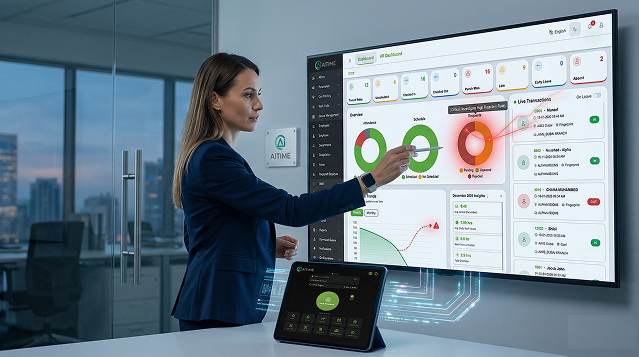
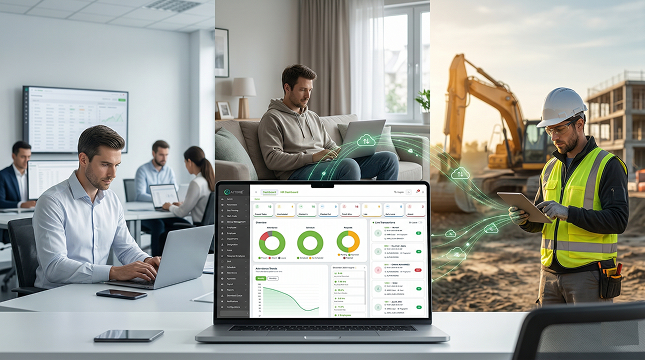
The AiTIME attendance tracker provides exactly this visibility. Managers can see who arrived late, who left early, and who has accumulated a pattern of tardiness — all from a live dashboard that requires no manual report compilation. This data creates productive accountability: employees understand the standards and can see their own records, which drives self-management.
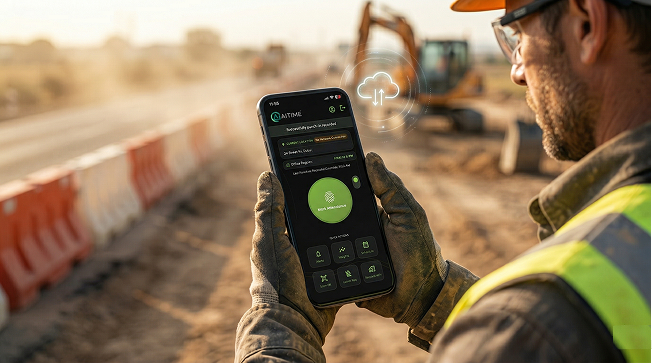
For UAE businesses with flexible or hybrid work arrangements, GPS-verified mobile clock-in confirms that employees working from home or at client sites are genuinely working when they say they are.
Shift Planning That Eliminates Waste
Unproductive time in the office is often a scheduling problem, not a people problem. If your customer service team peaks at noon but is fully staffed from 8 AM to 8 PM uniformly, you have hours of wasted capacity at the fringes and potential understaffing at the peak. Intelligent shift planning matches your staffing levels to your actual demand curve.
The AiTIME scheduling app enables UAE managers to build demand-aligned rosters that are automatically checked against UAE labour law constraints — maximum working hours, mandatory rest periods, and overtime caps. Rosters that previously took hours to build manually are produced in minutes, and changes (swaps, replacements, additions) are managed with real-time visibility of who is available.
HR Software Reducing Administrative Burden
One of the most underappreciated productivity drains in UAE offices is the time HR professionals and line managers spend on administrative tasks that should be automated: chasing timesheets, manually calculating leave balances, processing overtime claims, and building payroll spreadsheets. Every hour spent on this is an hour not spent on strategic work.
Modern HR software for UAE businesses automates the entire administrative cycle. Attendance is captured automatically. Leave requests are submitted and approved through an app. Payroll is calculated from verified attendance data and WPS files are generated at the click of a button. The result is an HR function that operates with the same headcount but spends far more time on value-adding activities — training, engagement, recruitment, and strategic workforce planning.
Managing leave fairly and transparently is also essential for office morale. The AiTIME leave management module gives employees visibility into their entitlements and balances, and enables managers to plan coverage around approved absences rather than being caught short.
Building a Culture of Punctuality
Punctuality culture is not about punishing late arrivals — it is about setting clear expectations, making the standards visible, and celebrating the norm. In a multicultural UAE team, where attitudes to time vary across cultures, establishing a consistent workplace standard requires explicit communication and fair enforcement.
Practical steps that work in UAE offices:
- Set clear written expectations for start times, break durations, and end times in employment contracts and the employee handbook
- Use a visible attendance dashboard that shows team punctuality — not to shame individuals, but to make the team standard clear
- Address repeat tardiness promptly and consistently, using documented conversations rather than informal warnings that are difficult to enforce
- Recognise consistent punctuality in performance reviews — not just exceptional work output
Ramadan Adjustments That Maintain Productivity
During Ramadan, UAE Labour Law requires that working hours for Muslim employees are reduced by two hours per day. Managing this adjustment — across a multicultural team where some employees are fasting and others are not — requires thoughtful scheduling and clear communication. Businesses that plan Ramadan rosters in advance, using shift management software that applies the reduced hours automatically, maintain much higher productivity levels than those that improvise week by week.
AiTIME allows UAE HR managers to configure Ramadan shift profiles that automatically apply the two-hour reduction for eligible employees, without disrupting the standard shift structure for non-Muslim colleagues.
Conclusion
Maximum office productivity in the UAE is the product of good physical organisation, smart time management systems, automated HR administration, and a culture of accountability that is fair, visible, and consistent. Technology plays a critical enabling role — particularly in attendance tracking, shift scheduling, and leave management — by removing the manual effort that slows HR teams down and introducing the transparency that drives employee self-accountability.
Ready to take the first step? Start a free AiTIME trial and see how automated attendance, scheduling, and HR software can transform your UAE office productivity in the first month.
HR Technology & Workforce Management Specialists
The AiTIME editorial team comprises HR technology specialists and workforce management experts with deep knowledge of UAE Labour Law, WPS payroll compliance, biometric attendance systems, and GCC business operations. AiTIME serves 500+ businesses across UAE, Saudi Arabia, Qatar, Kuwait, Bahrain, and Oman.
Ready to Transform Your Workforce Management?
Join 500+ businesses using AiTIME for attendance tracking, shift scheduling, and HR analytics.