How AI Is Revolutionising Workforce Scheduling — What UAE Businesses Need to Know
How AI Is Revolutionising Workforce Scheduling — What UAE Businesses Need to Know
Workforce scheduling has always been one of the most time-consuming tasks in HR management. In the UAE — a market characterised by multi-shift operations, diverse nationalities, seasonal demand spikes, and strict MOHRE compliance requirements — getting scheduling right is genuinely complex. For decades, operations managers have relied on spreadsheets, whiteboards, and gut instinct to build rosters. Artificial intelligence is changing that entirely.
The Pain Points of Traditional Scheduling in the UAE
Before exploring AI solutions, it is worth understanding why traditional scheduling fails so consistently in UAE workplaces:
- Manual effort is enormous: Building a roster for 200 employees across three shifts requires hours of careful cross-referencing — who is on leave, which employees have specialised certifications, which nationalities have visa restrictions on certain shift types, and how to balance overtime to stay within legal limits.
- Last-minute absences cascade: When an employee calls in sick in a high-volume hospitality or retail environment, managers scramble to find replacements. Without a system that knows who is available and trained, they fall back on WhatsApp messages and phone calls — a chaotic and slow process.
- Demand forecasting is guesswork: A Dubai Mall retail outlet experiences vastly different footfall on a Tuesday afternoon versus a Friday evening during Eid. Traditional scheduling does not account for predicted demand; it simply replicates last week's roster. The result is over-staffing in slow periods (wasted cost) and under-staffing at peak times (lost revenue and customer dissatisfaction).
- Compliance is manually verified: UAE labour law caps working hours and mandates rest periods. Manually checking every proposed roster against these rules is error-prone, and violations can result in MOHRE penalties.
What AI-Powered Scheduling Actually Does
AI workforce scheduling replaces rule-of-thumb decisions with data-driven optimisation. Here is how the technology works in practice:
Demand Prediction
The AI engine analyses historical data — past attendance records, sales volumes, customer footfall, production output — alongside external signals such as public holidays, weather forecasts, and local events. It predicts how many employees are needed per shift, per department, per skill level, on any given day. For a Dubai hotel, this means knowing that the 4 PM to midnight shift on New Year's Eve needs 40% more F&B staff than a standard Friday — weeks in advance, not the morning of.
Automated Shift Assignment
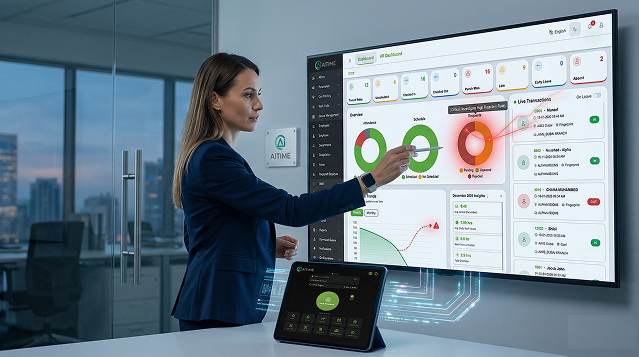
Once demand is predicted, the AI matches requirements against the available workforce, applying constraints automatically: contractual hours, skill requirements, rest period rules, leave balances, and employee preferences. What would take an HR manager three hours to produce manually can be generated in seconds. The AiTIME scheduling app delivers exactly this capability for UAE businesses of all sizes.
Real-Time Adjustment
When an employee punches in late or calls in absent, the system immediately identifies the gap and suggests the best available replacement based on skills, current hours, and location. Managers receive a push notification with a one-tap confirmation option rather than having to hunt for a solution manually.
Overtime Optimisation
AI scheduling actively minimises unnecessary overtime by distributing hours equitably across the workforce. Where overtime is genuinely required, it calculates the least-cost way to cover the gap, considering the 1.25x and 1.5x overtime rates mandated under UAE Federal Decree-Law No. 33 of 2021. This alone can reduce overtime costs by 15–25% in high-shift industries.
Industry Applications in the UAE
Hospitality
Dubai's hospitality sector employs hundreds of thousands of workers across hotels, restaurants, and entertainment venues. AI scheduling allows operations managers to build rosters aligned with reservations data, event bookings, and seasonal occupancy patterns. Staff are on the floor when guests need them — not sitting idle between check-in waves.
Retail
UAE mall retailers face extreme demand variability across the week and year. AI-driven scheduling syncs with POS footfall data to staff departments optimally, reducing wage spend during slow hours while ensuring peak coverage during high-traffic windows like National Day and Dubai Shopping Festival.
Construction
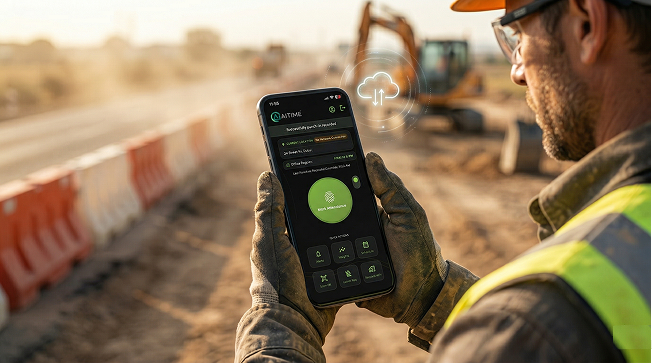
Construction sites in the UAE operate in challenging conditions with complex multi-trade coordination. AI scheduling helps site managers coordinate which trades are needed when, ensuring concrete pours are supported by the right number of labourers and that safety officer coverage is continuous throughout each shift. The AiTIME shift management system supports these multi-site construction scheduling requirements natively.
The Business Case: Real Cost Savings
The ROI from AI scheduling is measurable and typically rapid. Businesses implementing AI-driven scheduling typically report:
- 20–30% reduction in overtime costs through better shift distribution
- 40–60% reduction in scheduling admin time for HR and operations managers
- 15–20% improvement in employee satisfaction scores due to more equitable and predictable schedules
- Near-elimination of compliance violations related to working hours and rest periods
For a UAE business with 300 employees across multiple shifts, the annual savings from overtime reduction alone can comfortably reach six figures in AED.
Getting Started with AI Scheduling
Transitioning from manual or spreadsheet-based scheduling to an AI-powered system is simpler than most organisations expect. The key steps are: migrating employee records and shift templates into the platform, connecting your attendance data source (biometric devices or mobile app), and configuring your pay rules and compliance constraints. AiTIME's onboarding team handles all of this for UAE clients, with typical go-live timelines of 2–4 weeks.
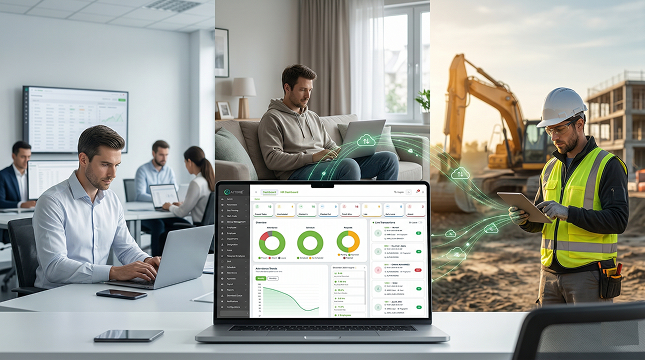
The AiTIME shift management system integrates directly with biometric attendance hardware, the mobile app, and payroll — so the schedule, the attendance record, and the salary calculation are all aligned in a single platform. No re-keying, no reconciliation, no errors.
Conclusion
AI-powered workforce scheduling is no longer a luxury reserved for multinational corporations. It is a practical, accessible tool that UAE businesses of 50 or more employees can deploy today to reduce costs, improve compliance, and free their HR teams from the weekly ordeal of manual roster building. As labour costs continue to rise and MOHRE compliance requirements tighten, the competitive advantage of intelligent scheduling will only grow.
Ready to see what AI scheduling looks like in practice? Book a free AiTIME demo and let our specialists walk you through a scheduling scenario built around your own workforce size and shift structure.
HR Technology & Workforce Management Specialists
The AiTIME editorial team comprises HR technology specialists and workforce management experts with deep knowledge of UAE Labour Law, WPS payroll compliance, biometric attendance systems, and GCC business operations. AiTIME serves 500+ businesses across UAE, Saudi Arabia, Qatar, Kuwait, Bahrain, and Oman.
Ready to Transform Your Workforce Management?
Join 500+ businesses using AiTIME for attendance tracking, shift scheduling, and HR analytics.